
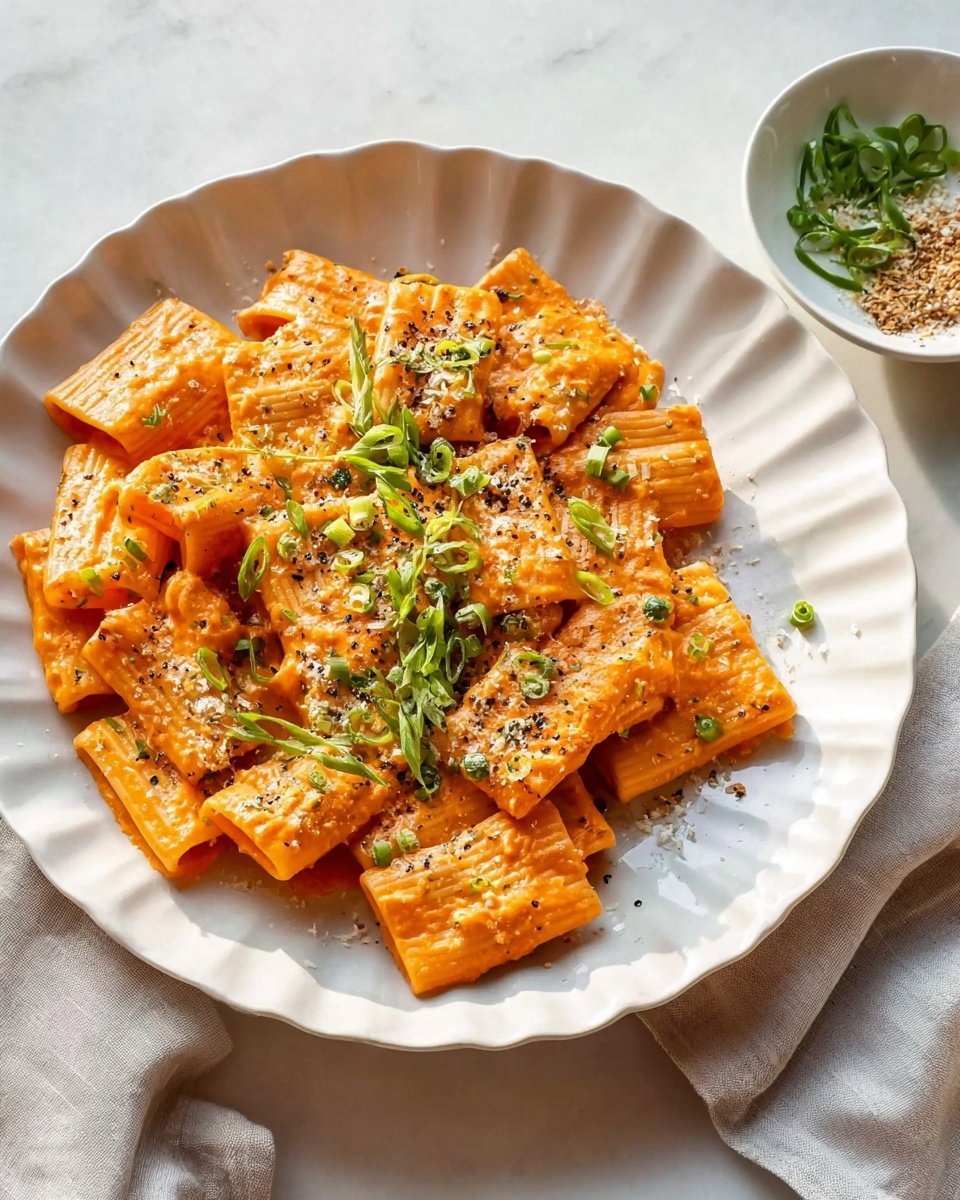
Imagine the warm, inviting aroma of garlic gently sizzling in olive oil, soon mingling with the subtle heat of gochujang paste. This Gochujang Pasta with Cream Cheese, Parmesan, and Spring Onions Recipe delivers a luscious, creamy sauce enveloping tender rigatoni, with a vibrant Korean twist that will have your taste buds dancing. It’s comfort food with a spicy kick, perfect for those nights when you crave something both soothing and exciting.
Why You’ll Love This Gochujang Pasta with Cream Cheese, Parmesan, and Spring Onions Recipe
- Bold, layered flavors: The creamy richness of cream cheese and Parmesan balances the fiery complexity of gochujang, creating a harmony that delights every bite.
- Simple ingredients: This recipe calls for everyday pantry staples—olive oil, garlic, rigatoni, and a few key flavor enhancers—making it wonderfully accessible.
- Perfect for weeknights: With just 10 minutes of prep and 10 minutes of cooking, you can have this dish ready in just 20 minutes, ideal for busy evenings.
- Inviting presentation: Garnished with fresh spring onions and a sprinkle of red pepper flakes, it looks as appetizing as it tastes.
- Flexible and customizable: Adjust the spiciness by adding more gochujang or red pepper flakes according to your mood and craving.
Why This Gochujang Pasta with Cream Cheese, Parmesan, and Spring Onions Recipe Works
This recipe shines because it masterfully blends Korean and Italian influences using the stovetop method, ensuring every ingredient contributes to the vibrant flavor profile. The slow frying of garlic in olive oil unlocks deep fragrance without bitterness, while the slightly diluted gochujang paste merges smoothly with the pasta water for balanced heat. The addition of cream cheese then creates a luxuriously creamy sauce that clings perfectly to rigatoni’s ridged surface. Finally, stirring in grated Parmesan and dried parsley off the heat locks in savory depth and fresh herbal notes, making this fusion pasta irresistibly satisfying.
Ingredients You’ll Need

Get ready to gather ingredients that bring this spicy, creamy pasta alive with both richness and a punch of flavor.
- 1 tbsp olive oil: The base for gently cooking garlic and layering flavor.
- 4 garlic cloves, minced: Infuses the oil with a warm, aromatic foundation.
- 4 cups (1lt) water: To cook the pasta and create a flavorful broth with the stock cube.
- 1 beef stock cube, crumbled: Adds umami depth, complementing the creamy sauce.
- 1 tsp salt: Enhances all flavors throughout the dish.
- 9 oz (260g) rigatoni: The perfect pasta shape to trap sauce in its ridges.
- 2 tbsp gochujang paste: The fiery Korean chili paste delivering that signature spicy kick.
- 7 oz (200g) full-fat cream cheese: Provides luscious creaminess and body.
- 4 tbsp grated Parmesan, plus extra to serve: Brings sharp, salty notes that elevate the sauce.
- 1 tsp dried parsley: Adds subtle herbaceous freshness.
- 2 spring onions, green parts only, finely sliced: Top the dish with a crisp, mild onion bite.
- Pinch red pepper flakes (to serve): Sprinkle for extra heat and color.
- Freshly ground black pepper: Season to taste for a bit of warm spice.
Ingredient Substitutions & Tips
- Gochujang paste: If you don’t have gochujang on hand, a mix of chili paste and a touch of miso can mimic the umami and heat.
- Cream cheese: For a lighter version, try a blend of cream cheese and Greek yogurt, but keep the full-fat for the creamiest result.
- Beef stock cube: Vegetable or mushroom stock cubes work just as well for a vegetarian twist.
- Rigatoni: Penne or other short tubular pasta shapes will hold the sauce lovingly in their curves and ridges.
👨🍳 Pro Tips for Perfect Results
- Use low heat when frying garlic: It prevents burning and extracts the best flavor.
- Reserve pasta water: It’s magic for adjusting the sauce’s consistency and helps bind it to the pasta.
- Taste as you go: The cream cheese and gochujang bring creaminess and spice—adjust the heat gradually.
- Don’t overcook the pasta: Aim for al dente, giving the final dish delightful bite and texture.
- Fresh spring onions last minute: Add them right before serving for a fresh crunch and vibrant color.
How to Make Gochujang Pasta with Cream Cheese, Parmesan, and Spring Onions Recipe
Step 1: Heat and cook garlic
Start by warming the olive oil gently in a pan; then, add the minced garlic and cook on low heat, stirring frequently. The aroma will slowly fill your kitchen as the garlic softens and releases its warm fragrance without crisping too much.
💡 Pro Tip: Low and slow is key here—avoid high heat to keep garlic sweet and mellow.
Step 2: Add pasta and gochujang paste
Pour in hot water, crumble in the beef stock cube, sprinkle salt, and bring it all to a gentle boil. Stir in your rigatoni and cook it for five minutes. Carefully ladle some of the cooking water into a bowl, then mix in the gochujang to tone down its intensity before swirling some into the bubbling pasta pot. This step ensures a smooth integration of spice right from the start.
💡 Pro Tip: Diluting the gochujang with pasta water helps to distribute its flavor evenly without overwhelming heat.
Step 3: Cook pasta until al dente
Keep cooking the rigatoni, stirring now and then to prevent sticking, until it’s perfectly al dente and most of the liquid has been absorbed. If it feels too wet, drain the pasta but remember to keep some of that flavorful pasta water for later.
💡 Pro Tip: Don’t rush this step — chewy, al dente pasta is what makes the dish stand out.
Step 4: Add cream cheese and adjust spiciness
Lower the heat to its softest setting, then add the cream cheese and stir it together with the spicy gochujang paste. Slowly blend this velvety sauce into the pasta, tasting and adjusting spice levels as you go. If the sauce seems thick, a splash of reserved pasta water will bring the perfect creaminess and silkiness.
💡 Pro Tip: Take your time building flavor here — this step transforms the dish into a luscious, spicy comfort meal.
Step 5: Finish and serve
Turn off the heat and fold in the grated Parmesan and dried parsley. Season with freshly ground black pepper, then crown your creation with finely sliced spring onions and a sprinkle of red pepper flakes for extra heat and contrasting texture. Serve immediately with an extra dusting of Parmesan for that final touch of indulgence.
💡 Pro Tip: Serve right away to enjoy the sauce at its creamiest and most flavorful.
Common Mistakes to Avoid
Learn from these common pitfalls:
- Cooking garlic too fast: It can burn easily, becoming bitter and spoiling the sauce’s delicate flavor.
- Skipping pasta water reserve: Without it, the sauce might turn too thick or fail to coat the pasta properly.
- Overcooking pasta: This leads to mushy texture and less enjoyment of the dish’s al dente charm.
- Adding cream cheese on high heat: It may curdle and break the sauce’s silky texture.
- Not tasting while adjusting spice: Gochujang can be potent; gradual seasoning avoids overwhelming heat.
- Using the entire spring onion: The white part can be too sharp in this dish—stick to the green parts for freshness.
Delicious Variations to Try
Once you’ve mastered this classic Gochujang Pasta with Cream Cheese, Parmesan, and Spring Onions Recipe, why not put your own spin on it?
Vegetarian Mushroom Boost
Swap the beef stock cube for a vegetable one and add sautéed mushrooms to the mix for an earthy, satisfying twist. This adds wonderful texture and umami depth.
Spicy Cajun Twist
Introduce a pinch of Cajun seasoning for southern flair, complementing the Korean heat while offering a bold, smoky aroma. Pair this creation with the Cheesy Bowtie Pasta with Savory Cajun Ground Beef for an entirely new flavor experience.
Garlic Parmesan Herb
Double down on the garlic and add fresh herbs like basil or oregano for a bright, garden-fresh spin on this creamy delight.
Vegan Style
Use vegan cream cheese and Italian-style vegan Parmesan alternatives with vegetable stock for a compassionate yet delicious dinner.
Double Cheese Dream
Mix mozzarella or fontina with the Parmesan for an even more indulgent, cheesy sauce that melts perfectly into the rigatoni.
How to Serve Gochujang Pasta with Cream Cheese, Parmesan, and Spring Onions Recipe
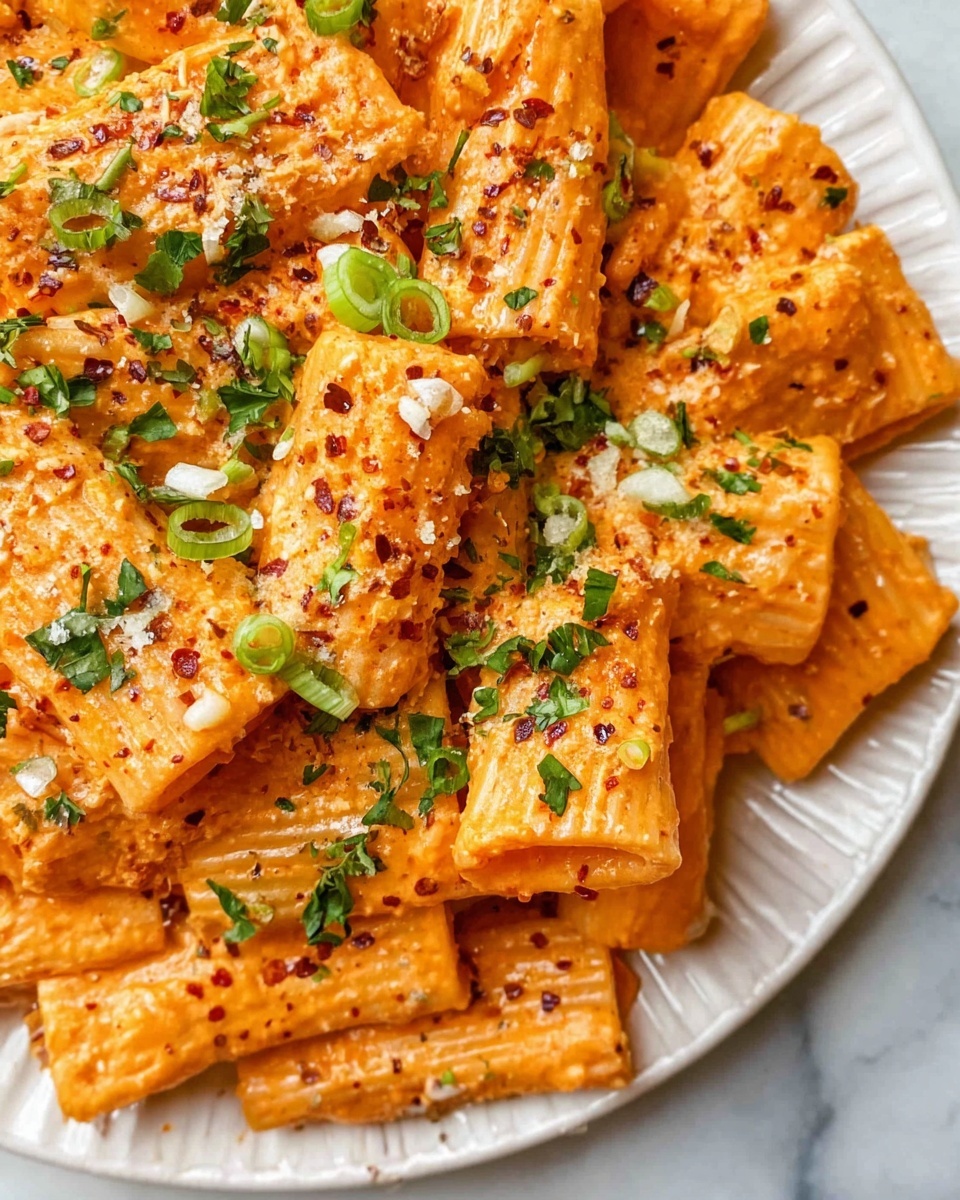
Garnishes
Add a generous sprinkle of extra grated Parmesan along with a handful of freshly chopped spring onions for a sharp, fresh finish. A few more red pepper flakes will also boost the dish’s vibrant kick.
Side Dishes
This pasta shines alongside simple green salads with tangy vinaigrettes or crunchy roasted vegetables. For heartier meals, steamed bok choy or sautéed kale amplify the Asian fusion feeling beautifully.
Creative Ways to Present
Serve in wide shallow bowls to showcase the rich sauce pooling around perfectly cooked rigatoni. For a fun touch, garnish with toasted sesame seeds or a drizzle of toasted sesame oil just before serving. You might also try pairing it with lighter, creamy mushroom dishes like our Creamy Mushroom Pasta: Easy, Rich, and Flavorful Dinner for a complete meal that dazzles.
Make Ahead and Storage
Make-Ahead Instructions
You can prepare the garlic-infused broth base and cook the rigatoni up to five hours ahead. Keep these components separate until ready to combine with cream cheese and gochujang for the freshest taste.
Storage
Store any leftovers in an airtight container in the refrigerator for up to 2 days. The sauce might thicken; just add a splash of water or broth when reheating to regain creaminess.
Freezing
This dish is best enjoyed fresh and does not freeze well due to the cream cheese sauce’s texture changing on thawing.
Reheating
Warm gently on the stovetop over low heat, stirring constantly and adding a bit of reserved pasta water to loosen the sauce and restore its luscious texture.
Expert Tips for Success
- Always start with low heat when frying garlic to prevent bitterness.
- Save some pasta water—it’s your secret weapon to perfect sauce consistency.
- Gradually add gochujang paste and taste as you go to balance the spice and creaminess perfectly.
- Use full-fat cream cheese for optimum silky texture and flavor.
- Cook pasta to al dente for the best mouthfeel.
- Finish with fresh spring onions just before serving for the best crunch and color contrast.
- If you want a sharper tang, add a squeeze of fresh lemon juice at the end.
Frequently Asked Questions
Can I use a different pasta instead of rigatoni?
Absolutely! Penne, ziti, or even rotini work beautifully because their shapes hold onto the creamy sauce just as well.
How spicy is this Gochujang Pasta with Cream Cheese, Parmesan, and Spring Onions Recipe?
The heat level can be adjusted easily by changing the amount of gochujang paste and red pepper flakes—start mild and build up to your liking.
Is this recipe suitable for vegetarians?
The original includes a beef stock cube, but you can substitute with a vegetable stock cube to make it vegetarian-friendly.
Can I prepare this recipe ahead of time?
You can prepare some parts, like cooking the pasta and garlic broth base, earlier in the day, but it’s best to combine the creamy sauce and gochujang just before serving.
What can I substitute for cream cheese if I don’t have any?
A blend of mascarpone or full-fat Greek yogurt can work in a pinch, but cream cheese gives the creamiest, most comforting texture.
How do I store leftovers?
Keep leftovers refrigerated in an airtight container for up to 2 days. Reheat gently with some added water to refresh the sauce.
Can this recipe be frozen?
It’s not recommended to freeze this dish, as the cream cheese sauce may separate and lose its smoothness upon thawing.
Final Thoughts
This Gochujang Pasta with Cream Cheese, Parmesan, and Spring Onions Recipe is a beautiful celebration of bold flavors and creamy textures wrapped around tender rigatoni. It’s the kind of dish that feels both comforting and adventurous—a fusion you’ll come back to time and time again. Whether cooking for yourself, family, or friends, this recipe promises to bring warmth, zest, and a little spicy magic to your table. So gather your ingredients, stir up the sauce, and enjoy the wonderful harmony of Korean heat and Italian creaminess in every delicious bite!
Print
Gochujang Pasta with Cream Cheese, Parmesan, and Spring Onions Recipe
- Prep Time: 10 minutes
- Cook Time: 10 minutes
- Total Time: 20 minutes
- Yield: 4 servings 1x
- Category: Pasta
- Method: Stovetop
- Cuisine: Korean fusion
- Diet: Halal
Description
This creamy and spicy Gochujang Pasta combines the rich flavors of gochujang paste and cream cheese with perfectly cooked rigatoni for a comforting, flavorful meal that’s quick to prepare.
Ingredients
Ingredients
- 1 tbsp olive oil
- 4 garlic cloves (, minced)
- 4 cups (1lt) water ( (or as needed))
- 1 beef stock cube (crumbled)
- 1 tsp salt
- 9 oz (260g) rigatoni (or your choice of pasta )
- 2 tbsp gochujang paste (, or more to taste)
- 7 oz (200g) cream cheese ( full-fat )
- 4 tbsp grated Parmesan (, plus extra to serve)
- 1 tsp dried parsley
- 2 spring onions (, green parts only, finely sliced)
- Pinch red pepper flakes (to serve)
- Freshly ground black pepper
Instructions
- Step 1: Heat the oil in a pan and pan fry the minced garlic over low heat, stirring, until it is fragrant. Add hot water, a crumbled stock cube and salt and bring to a boil.
- Step 2: Stir in the pasta and cook for five minutes. Use a ladle to transfer some of the pasta water to a bowl. Stir in the Gochujang paste to dilute it slightly and stir some into the boiling pasta.
- Step 3: Cook the pasta until is is al dente, stirring occasionally to avoid sticking, and most of the liquid has been absorbed. If there’s a lot then drain the pasta but reserve some of the pasta water.
- Step 4: Stir the cream cheese in with the spicy paste to combine. Gradually stir into the pasta on the lowest heat setting. You will need to taste as you go and build on the spicyness. The pasta should now be super creamy and saucy. If not then stir in some of the pasta water.
- Step 5: Turn the heat off and stir in the Parmesan and dried parsley. Taste and season with black pepper. Top with the finely diced spring onions andred pepper flakes. Serve immediately with an extra sprinkling of grated cheese.

Your email address will not be published. Required fields are marked *