
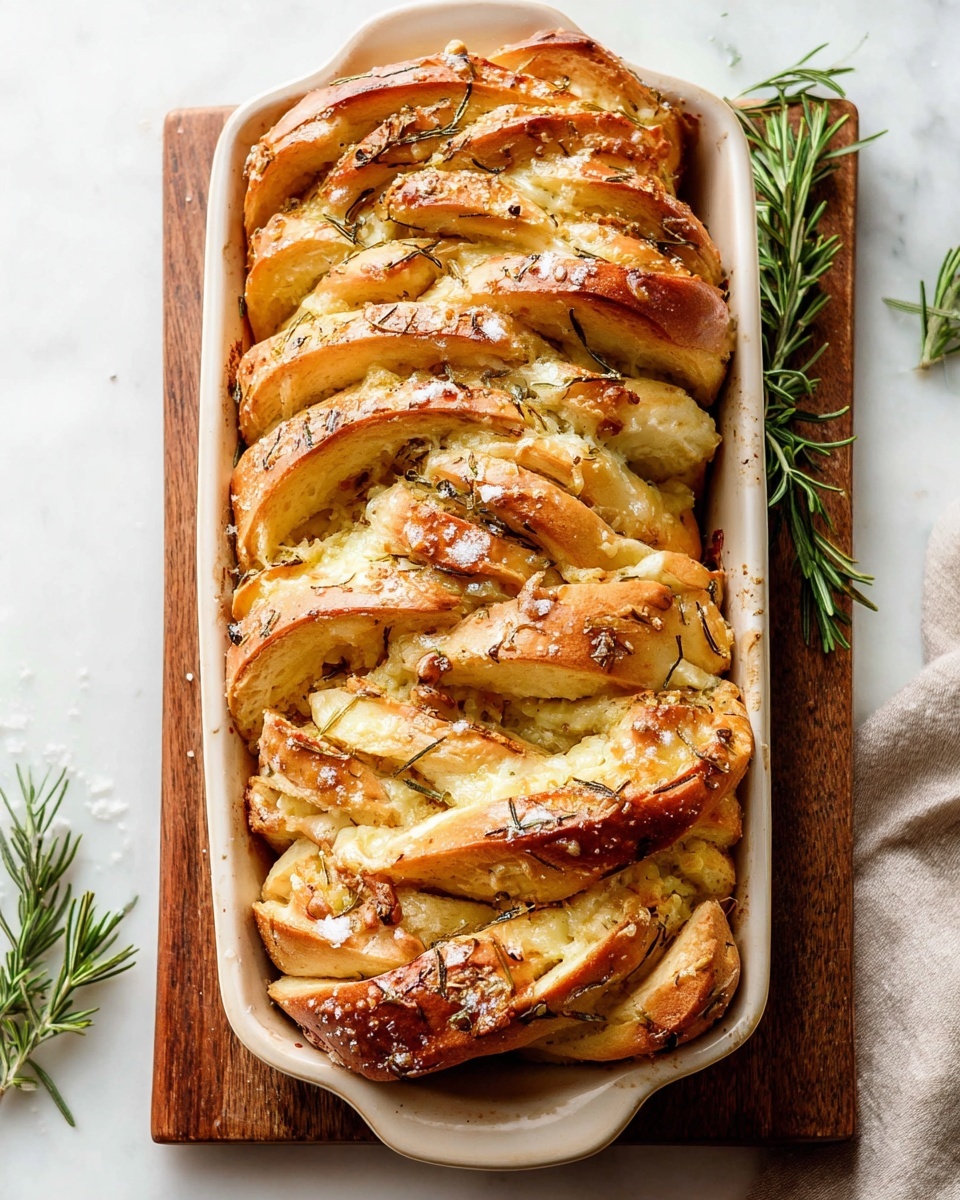
I never thought I’d find a Rosemary Garlic Pull Apart Bread Recipe easier and more rewarding to make than this one. Imagine warm, buttery layers scented with fresh rosemary and garlic, oozing with melted cheese as you pull apart each fluffy piece. The golden crust with a sprinkle of coarse sea salt adds a perfect finishing touch that’s simply irresistible for cozy gatherings or a comforting snack.
Why You’ll Love This Rosemary Garlic Pull Apart Bread Recipe
- Rich, savory flavors: The marriage of fresh herbs, garlic, and melted cheese creates a loaf bursting with irresistible aroma and taste that fills your kitchen with warmth.
- Simple yet special ingredients: Using pantry staples like all-purpose flour and butter combined with fresh rosemary and garlic brings gourmet flavor without overwhelming your shopping list.
- Perfect for sharing: This pull apart bread is an ideal centerpiece for casual family dinners or entertaining friends, inviting everyone to savor delicious, tender pieces straight from the loaf.
- Impressive presentation: The beautifully layered dough balls folded with herb butter and cheese create a stunning loaf that looks as delightful as it tastes.
- Customizable filling: You can tailor the cheese blend or herb combination to suit your cravings or what you have on hand in the kitchen.
Why This Rosemary Garlic Pull Apart Bread Recipe Works
This recipe shines thanks to its careful use of Platinum Yeast from Red Star, which gives the dough a perfect rise and texture. The method combines a two-stage rise allowing the dough to develop lightness and flavor. The softened butter filling mixed with fresh rosemary, parsley, and garlic infuses the bread with aromatic richness that melts beautifully inside each folded piece. Baking at a steady 350°F (177°C) ensures a golden crust without drying out the tender interior, while a final brush of melted butter and sprinkling of sea salt add to the comforting, savory finish.
Ingredients You’ll Need

Gather cozy, flavorful ingredients that transform into this mouthwatering bread—fresh herbs, rich butter, melted cheese, and a soft batter that turns into pure comfort.
- 2 teaspoons Platinum Yeast from Red Star: The secret to a light, fluffy dough that rises beautifully.
- 1 Tablespoon granulated sugar: Feeds the yeast to kickstart fermentation and slight sweetness.
- 3/4 cup whole milk: Warmed to about 110°F (43°C) to breed a tender crumb and rich dough.
- 3 Tablespoons unsalted butter, softened: Enriches the dough base with creamy softness.
- 1 large egg: Adds structure and moisture for the perfect loaf.
- 2 and 1/3 cups all-purpose flour: The sturdy backbone of this bread; spooned and leveled for precision.
- 1 teaspoon salt: Balances flavor and strengthens dough gluten.
- 1 teaspoon garlic powder: A gentle garlicky undertone within the dough.
- 1 Tablespoon finely chopped fresh rosemary (or 2 teaspoons dried): The star herb bringing evergreen aroma and flavor.
- 5 Tablespoons unsalted butter, extra soft (for filling): The buttery canvas for herbs and garlic to shine.
- 1 Tablespoon finely chopped fresh parsley (or 2 teaspoons dried): Adds fresh, slightly peppery brightness in the filling.
- 2 garlic cloves, minced or 1/2 teaspoon garlic powder: The soulful punch of garlic in each bite.
- 1/4 teaspoon salt: Enhances the filling’s flavor depth.
- 3/4 cup shredded parmesan, mozzarella, or white cheddar cheese: Melty, savory cheese that ties the filling together.
- 1 Tablespoon unsalted butter, melted (for topping): Brushed on the finished loaf for a brilliant gleam and rich taste.
- Coarse or flaky sea salt: Sprinkled on top for irresistible crunch and flavor pops.
Ingredient Substitutions & Tips
- Platinum Yeast: You can substitute with active dry yeast if needed, but adjust rising times slightly.
- Butter: Use salted butter in a pinch but reduce salt elsewhere to balance flavors.
- Herbs: If fresh rosemary is unavailable, dried is perfectly fine, just use less to avoid overpowering.
- Cheese: Feel free to experiment with your favorite melty cheeses like gouda or fontina for a unique twist.
👨🍳 Pro Tips for Perfect Results
- Use room temperature butter: For easier spreading and even flavor in the filling.
- Don’t over-flour the dough: Keep it soft and slightly tacky for the best texture.
- Warm environment rising: Use a warm (not hot) spot or a turned-off oven with a light on to encourage perfect dough rise.
- Check dough with windowpane test: Stretch a small piece until thin and translucent to ensure proper gluten development.
- Cover dough with plastic wrap: Prevents drying out during rises.
How to Make Rosemary Garlic Pull Apart Bread Recipe
Step 1: Make the dough
Start by mixing yeast and sugar in your stand mixer bowl (or a large bowl), then pour warm milk heated to around 110°F (43°C) over it. Whisk gently, cover with a towel, and wait until it froths—this signals your yeast is active and ready.
💡 Pro Tip: Frothy yeast means your bread will rise beautifully.
Step 2: Mix dough if no mixer
Don’t fret if you lack a mixer. Use a wooden spoon or silicone spatula to combine ingredients by hand, getting familiar with your dough’s texture as you go.
💡 Pro Tip: Manual mixing lets you feel when your dough is ready for the next step.
Step 3: Add ingredients
Introduce softened butter, egg, flour, salt, garlic powder, and rosemary to the bowl. Beat on low speed until the dough comes away from the bowl sides, about 3 minutes. If too sticky, add flour tablespoon by tablespoon until manageable but still soft.
💡 Pro Tip: Don’t add too much flour—keep the dough soft for tender bread.
Step 4: Knead the dough
Switch to the dough hook and knead for 5 full minutes, or knead by hand on a lightly floured surface. Your dough should feel soft but elastic, slowly bouncing back when poked. Perform a windowpane test to confirm gluten development.
💡 Pro Tip: Perfect kneading is key for airy, fluffy bread.
Step 5: 1st Rise
Shape dough into a ball, place in a greased bowl, cover tightly, and let rise in a warm spot until doubled in size, around 60-90 minutes. Use a warm oven trick if needed to speed the process.
💡 Pro Tip: Proper rising ensures tender texture and great flavor.
Step 6: Prepare filling
While your dough rises, blend soft butter with rosemary, parsley, garlic, and salt until creamy. Cover and keep at room temperature until ready to spread.
💡 Pro Tip: Mixing filling ahead lets flavors meld perfectly.
Step 7: Assemble the bread
Punch down the risen dough, turn it onto a floured surface, and divide into 12 equal pieces. Flatten each into approximately 4-inch circles. Spread 1-2 teaspoons of herb butter on each, sprinkle with 1 tablespoon cheese, then fold in half and arrange folded pieces in your prepared loaf pan.
💡 Pro Tip: No need for perfect rounds—the rustic shapes add charm!
Step 8: 2nd Rise
Cover dough in the pan and let it puff up in a warm place for about 45 minutes, priming the bread to rise perfectly once baked.
💡 Pro Tip: Don’t rush this step; the fluffier the rise, the softer the bread.
Step 9: Preheat oven
Set your oven rack lower third and preheat to 350°F (177°C) so the bread bakes evenly into a beautiful golden loaf.
💡 Pro Tip: Proper oven temperature is essential for an even bake.
Step 10: Bake
Bake the bread for about 50 minutes, tenting with foil if it browns too quickly. Watch for that bubbly, golden top, with melted butter soaking into the bread’s edges for superb moistness. Once done, brush with melted butter and sprinkle coarse sea salt for that signature pull-apart bread finish.
💡 Pro Tip: Don’t skip the butter brushing; it elevates flavor and appearance.
Step 11: Cool and serve
Allow the bread to cool for 10 minutes in the pan before removing so it sets nicely. Serve warm to enjoy the full melty, herby, garlicky goodness.
💡 Pro Tip: Freshly baked and warm is simply unbeatable.
Step 12: Store leftovers
Store covered at room temperature for up to 2 days or refrigerate for up to 1 week. To soften the crust again, reheat in a 300°F (149°C) oven for 10-15 minutes or briefly microwave.
💡 Pro Tip: Reheating revives that soft, fresh-baked texture.
Common Mistakes to Avoid
Learn from these common pitfalls:
- Not warming milk correctly: Too cold or too hot milk can kill yeast or slow rising.
- Using too much flour: Leads to dense, dry bread rather than soft and fluffy.
- Skipping the second rise: The dough won’t reach ideal softness or the pull-apart effect.
- Overbaking: Can dry out the bread; check for golden color and softly baked texture.
- Not softening the butter for filling: Makes spreading difficult and uneven flavor distribution.
- Ignoring the windowpane test: Dough might be under-kneaded, affecting texture.
Delicious Variations to Try
Once you’ve mastered this Rosemary Garlic Pull Apart Bread Recipe, these variations will keep your bread game exciting:
Cheesy Herb Medley
Mix in fresh thyme and oregano with your rosemary and parsley, and swap the cheese for a combo of gouda and white cheddar for a more complex, cheesy bite.
Sun-Dried Tomato and Basil
Add finely chopped sun-dried tomatoes and fresh basil to the herb butter filling for a Mediterranean twist bursting with color and flavor.
Spicy Jalapeño and Cilantro
For a kick, fold in minced jalapeños and chopped cilantro to the filling and use pepper jack cheese instead of the usual parmesan or mozzarella.
Lemon Rosemary Zest
Add lemon zest to the butter filling for a bright, fresh note that beautifully complements the rosemary and garlic.
Olive and Parmesan Blend
Stir in finely diced black or green olives with extra parmesan for a salty, savory flavor that pairs nicely with the bread’s softness.
Try our Fluffy Garlic Butter Rolls: Irresistible Homemade Garlic Bread for a similar treat that’s equally comforting and delicious.
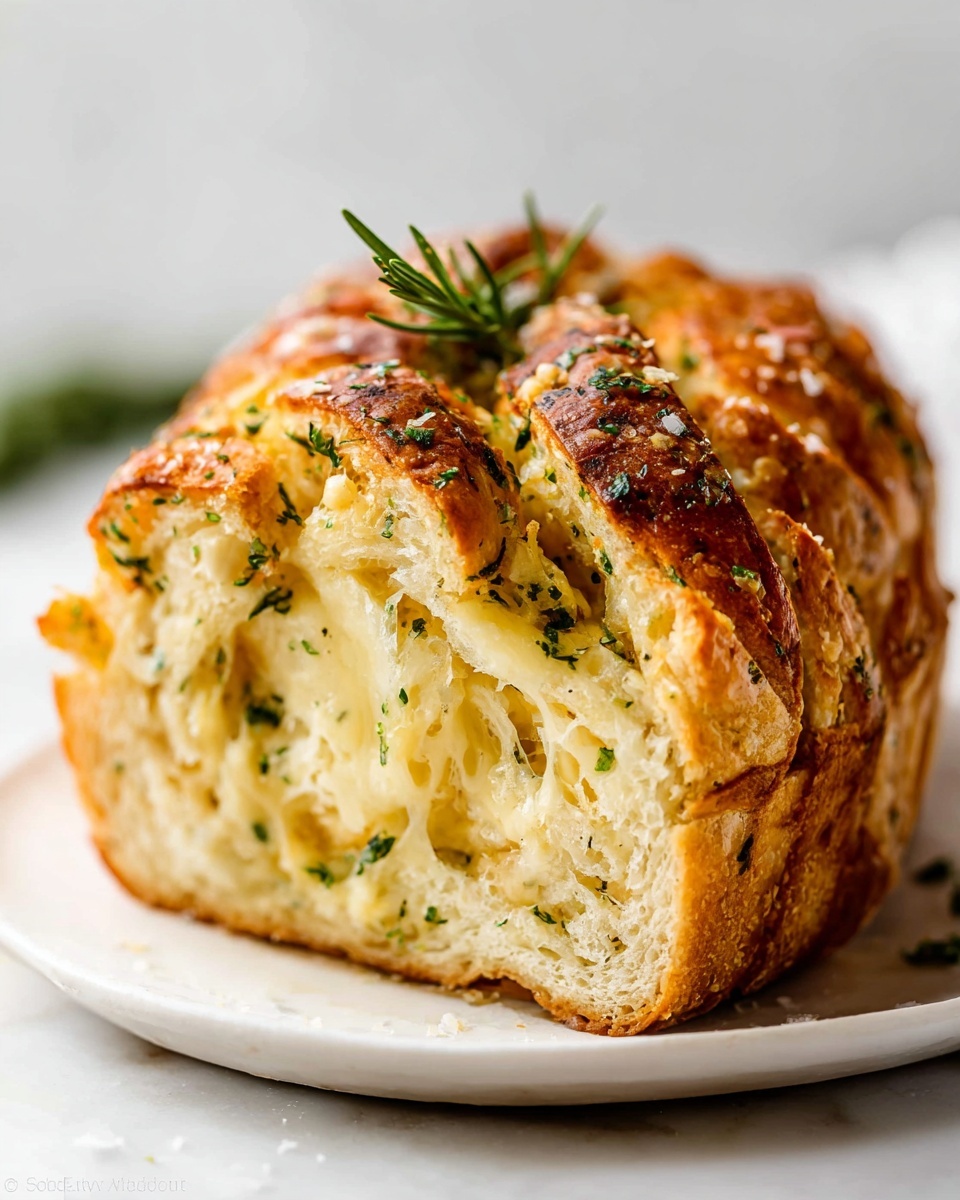
How to Serve Rosemary Garlic Pull Apart Bread Recipe
Garnishes
A sprinkle of fresh chopped parsley or a dusting of extra parmesan cheese just before serving adds a lovely fresh touch. For a final flourish, drizzle a little extra virgin olive oil or drizzle some flavored infused oil.
Side Dishes
This bread makes a perfect companion to hearty soups, creamy pastas, or vibrant salads. Pair it with a fresh garden salad or your favorite tomato basil soup for a cozy, complete meal.
Creative Ways to Present
Arrange the bread on a rustic wooden board inviting guests to pull apart pieces themselves, or serve in a bread basket lined with a colorful linen napkin. This approach makes the sharing experience casual and heartwarming. Also, consider serving alongside our Lemon Blueberry Bread with Lemon Glaze for an inviting bread board with both savory and sweet options.
Make Ahead and Storage
Make-Ahead Instructions
You can prepare the dough and let it complete its first rise overnight in the refrigerator. Bring to room temperature before shaping and assembling for the second rise. The filling can be made a day ahead and left covered at room temperature.
Storage
Store the baked bread covered at room temperature for up to 2 days or refrigerate it for up to a week. Keep it tightly wrapped or in an airtight container to preserve moistness.
Freezing
This bread freezes beautifully. Wrap it tightly in plastic wrap and aluminum foil and freeze for up to 1 month. Thaw overnight in the fridge before reheating.
Reheating
Warm in a 300°F (149°C) oven for 10-15 minutes to restore tenderness and flavors. For a quick heat, microwave portions briefly but watch for moisture loss.
Expert Tips for Success
- Measure flour carefully: Spoon and level to avoid dense dough.
- Ensure yeast is fresh and active: Look for froth before mixing dough.
- Soft but not sticky dough: Adjust flour slightly during kneading to perfect texture.
- Room temperature ingredients: Butter and egg create better dough cohesion at room temp.
- Let the bread cool slightly: This prevents dough from being gummy when sliced.
- Use fresh herbs when possible: For best aroma and flavor punch.
- Don’t skip the melted butter finish: It keeps the crust soft and shiny.
Frequently Asked Questions
Can I make this bread gluten-free?
This recipe relies on gluten development for its texture, so a gluten-free flour blend wouldn’t create the same pull-apart effect.
Can I substitute dried herbs for fresh?
Yes! Use two teaspoons dried rosemary or parsley to replace one tablespoon fresh. Dried herbs are more concentrated so use less.
What type of cheese works best?
Parmesan, mozzarella, or white cheddar all work beautifully. Choose melty varieties you love.
Can I skip the second rise?
The second rise is important for texture and lightness. Skipping it will result in denser bread.
How do I know when the bread is done?
The loaf will turn golden brown and sound hollow when tapped. The internal temperature should reach about 190°F (88°C).
Can I make the dough the night before?
Yes! Refrigerate the dough after the first rise and continue the recipe the next day.
Is this recipe vegetarian?
Absolutely, this Rosemary Garlic Pull Apart Bread Recipe is vegetarian-friendly and free of animal-based rennet or meat products.
Final Thoughts
This Rosemary Garlic Pull Apart Bread Recipe invites you to slow down and savor each delicious, buttery bite. From the soft, pillowy layers to the vibrant, herb-filled aroma, it’s a recipe that brings warmth and comfort with every pull. Whether sharing with loved ones or indulging in a quiet moment, this bread promises to delight both your senses and your heart. Grab your ingredients, and enjoy this irresistible baking adventure—it’s worth every moment in your kitchen.
Related Recipes You’ll Love
If you enjoyed this recipe, you’ll also love these delicious recipes:
- Fluffy Garlic Butter Rolls: Irresistible Homemade Garlic Bread – Soft, buttery rolls infused with garlic and herbs, perfect for dinner or snacking.
- Lemon Blueberry Bread with Lemon Glaze | Fresh & Irresistible – A bright, sweet bread packed with fresh blueberries and a tangy lemon glaze for a refreshing twist.
Related Recipes You’ll Love
If you enjoyed this Rosemary Garlic Pull Apart Bread Recipe, try our savory Copycat Olive Garden Breadsticks for a delightful Italian-American breadstick experience that’s perfect alongside your favorite dinners.
Print
Rosemary Garlic Pull Apart Bread Recipe
- Prep Time: 20 minutes
- Cook Time: 50 minutes
- Total Time: 3 hours 25 minutes
- Yield: 1 serving 1x
- Category: Bread
- Method: Baking
- Cuisine: American
- Diet: Vegetarian
Description
This Rosemary Garlic Pull Apart Bread is a flavorful, soft pull-apart bread infused with fresh herbs, garlic, and cheese, perfect for serving warm as a comforting snack or side.
Ingredients
For the Dough
- 2 teaspoons Platinum Yeast from Red Star*
- 1 Tablespoon granulated sugar
- 3/4 cup (180ml) whole milk
- 3 Tablespoons (43g) unsalted butter, softened to room temperature
- 1 large egg
- 2 and 1/3 cups (291g) all-purpose flour (spooned & leveled), plus more as needed*
- 1 teaspoon salt
- 1 teaspoon garlic powder
- 1 Tablespoon finely chopped fresh rosemary (or 2 teaspoons dried)
For the Filling
- 5 Tablespoons (71g) unsalted butter, extra soft (see note)
- 1 Tablespoon finely chopped fresh rosemary (or 2 teaspoons dried)
- 1 Tablespoon finely chopped fresh parsley (or 2 teaspoons dried)
- 2 garlic cloves, minced or 1/2 teaspoon garlic powder
- 1/4 teaspoon salt
- 3/4 cup (95g) shredded parmesan, mozzarella, or white cheddar cheese (or your favorite shredded cheese)
For Topping
- 1 Tablespoon (14g) unsalted butter, melted
- coarse or flaky sea salt for sprinkling
Instructions
- Make the dough
Place the yeast and sugar in the bowl of a stand mixer fitted with a dough hook or paddle attachment. Or, if you do not own a stand mixer, a regular large mixing bowl. Heat the milk on the stove or in the microwave until warm to touch, about 110°F (43°C). Pour warm milk on top of yeast/sugar. Whisk gently to combine, then loosely cover with a clean kitchen towel and allow to sit for 5-10 minutes. The mixture will be frothy after 5-10 minutes. - Mix Dough
If you do not have a mixer, you can mix the dough together with a wooden spoon or silicone spatula in this step - Add Ingredients
Add the butter, egg, flour, salt, garlic powder, and rosemary. Beat on low speed until the dough comes together and pulls away from the sides of the bowl, about 3 minutes. If the dough isn’t pulling away from the sides of the bowl, add a little more flour, a Tablespoon at a time. Dough will be soft. - Knead the dough
Keep the dough in the mixer (and switch to the dough hook if using the paddle) and beat for an additional 5 full minutes, or knead by hand on a lightly floured surface for 5 full minutes. (If you’re new to bread-baking, my How to Knead Dough video tutorial can help here.) If the dough becomes too sticky during the kneading process, sprinkle 1 Tablespoon of flour at a time on the dough or on the work surface/in the bowl to make a soft, slightly tacky dough. Do not add more flour than you need because you do not want a dry dough. After kneading, the dough should still feel a little soft. Poke it with your finger—if it slowly bounces back, your dough is ready to rise. You can also do a “windowpane test” to see if your dough has been kneaded long enough: tear off a small (roughly golfball-size) piece of dough and gently stretch it out until it’s thin enough for light to pass through it. Hold it up to a window or light. Does light pass through the stretched dough without the dough tearing first? If so, your dough has been kneaded long enough and is ready to rise. If not, keep kneading until it passes the windowpane test. - 1st Rise
Shape the kneaded dough into a ball. Place the dough in a greased bowl (I use nonstick spray to grease) and cover with plastic wrap or aluminum foil. Place in a slightly warm environment to rise until doubled in size, around 60-90 minutes. (If desired, use my warm oven trick for rising. See my answer to Where Should Dough Rise? in my Baking with Yeast Guide.) - Prepare Filling
As the dough rises, prepare the filling in the next step and grease a 9×5-inch loaf pan. - Make the filling
In a medium bowl, mix the soft butter, rosemary, parsley, garlic, and salt together. If the butter is soft enough, you can just mix it all together with a spoon or fork. You can use an electric mixer if that’s easier too. Cover tightly and set aside until ready to use. (Don’t refrigerate unless making well in advance. It’s easiest to spread on the dough when at room temperature. If refrigerated, let it come to room temperature before spreading on dough pieces.) - Assemble the bread
Punch down the dough to release the air. Place dough on a lightly floured work surface. Divide it into 12 equal pieces, each about 1/4 cup of dough and a little larger than a golf ball. Using lightly floured hands, flatten each into a circle that’s about 4 inches in diameter. The circle doesn’t have to be perfectly round. I do not use a rolling pan to flatten, but you certainly can if you want. Spread 1-2 teaspoons of filling mixture onto each. Sprinkle each with 1 Tablespoon of cheese. Fold circles in half and line in prepared baking pan, round side up. See photos above for a visual. - 2nd Rise
Cover with plastic wrap or aluminum foil and allow to rise once again in a slightly warm environment until puffy, about 45 minutes. - Preheat Oven
Adjust the oven rack to the lower third position then preheat oven to 350°F (177°C). - Bake
Bake until golden brown, about 50 minutes. If you find the top of the loaf is browning too quickly, tent with aluminum foil. (Don’t be alarmed if there’s melted butter around the sides of the bread as it bakes, it will seep into the bread before it finishes.) Remove from the oven and place the pan on a wire rack. If desired, brush with melted butter for topping and sprinkle with sea salt. - Cool and Serve
Cool for 10 minutes in the pan, then remove from the pan and serve warm. - Store Leftovers
Cover and store leftovers at room temperature for up to 2 days or in the refrigerator for up to 1 week. Since the bread is extra crispy on the exterior, it will become a little hard after day 1. Reheat in a 300°F (149°C) oven for 10-15 minutes until interior is soft again or warm in the microwave.
Notes
- If the dough isn’t pulling away from the sides of the bowl, add a little more flour, a Tablespoon at a time.
- Do not add more flour than you need because you do not want a dry dough.
- Soft butter makes it easiest to spread the filling; if refrigerated, bring to room temperature before spreading.
- Use nonstick spray to grease the bowl for rising and the loaf pan for assembling the bread.
- If the top browns too quickly during baking, tent with aluminum foil.
- Leftover bread becomes firmer after day 1; reheat in oven at 300°F (149°C) for 10-15 minutes or microwave to soften again.


Your email address will not be published. Required fields are marked *