
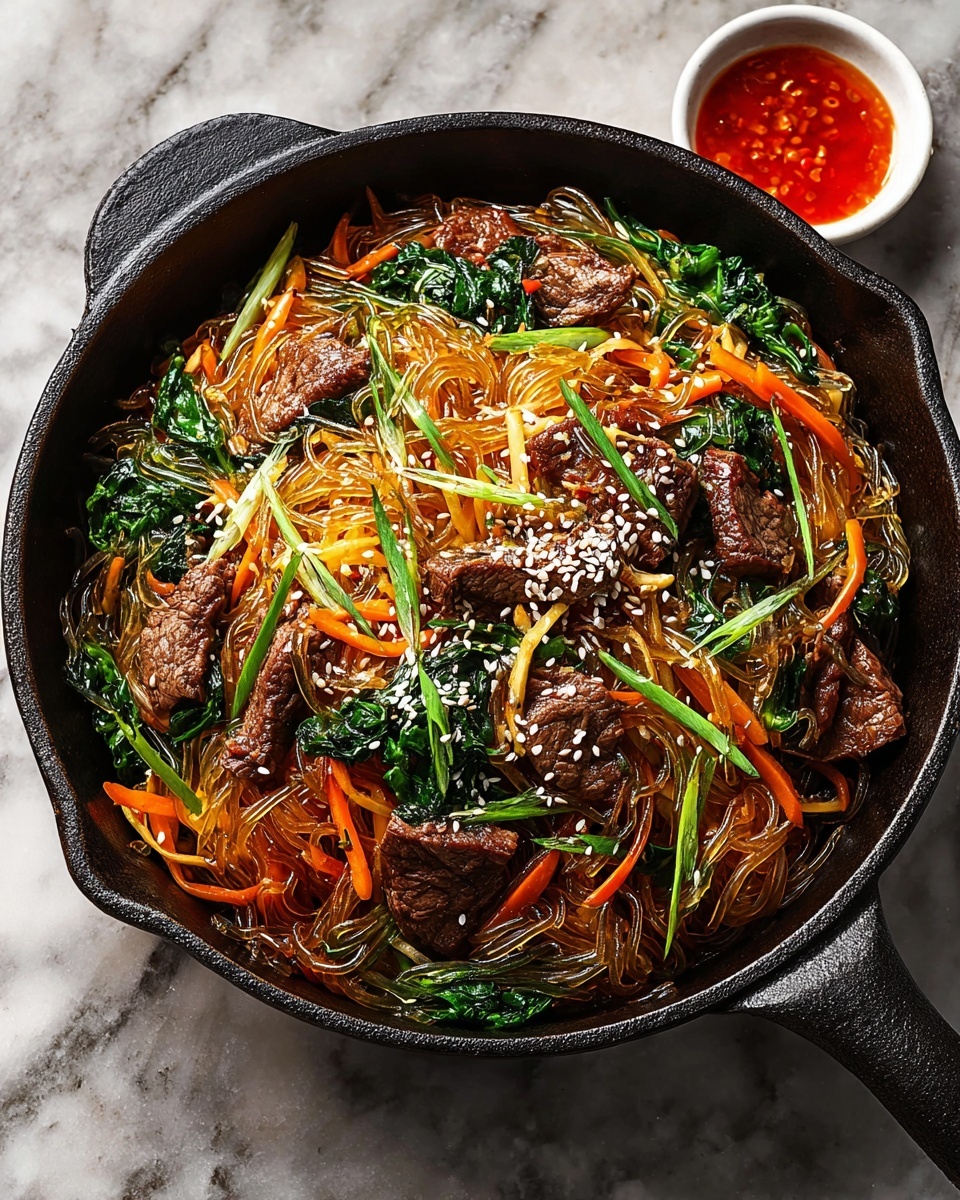
Picture this: The inviting aroma of toasted sesame oil mingling with sweet soy and caramelized beef fills your kitchen, while vibrant ribbons of glossy glass noodles dance with bright orange carrots and emerald spinach. As you twirl those silky strands around your chopsticks, the perfect harmony of tender beef, crisp vegetables, and subtle sweetness fills your mouth with an unforgettable burst of flavor. This Japchae: Korean Glass Noodle Stir-Fry with Beef and Vegetables Recipe is not just a meal; it is a soulful experience that brings a touch of Korean tradition right to your table, impressively effortless and irresistibly delicious.
Why You’ll Love This Japchae: Korean Glass Noodle Stir-Fry with Beef and Vegetables Recipe
- Quick and Easy: Ready in just 1 hour total, combining prep and cooking for a satisfying yet approachable kitchen adventure.
- Simple Ingredients: Using familiar pantry staples like soy sauce, garlic, and sesame oil, plus a handful of fresh veggies, this recipe is accessible and wholesome.
- Perfect for Weeknights: Balances a nourishing meal with vibrant flavors that won’t leave you stuck in the kitchen all evening.
- Impressive Presentation: The brilliant mix of translucent noodles with colorful vegetables and glossy beef creates a feast for both the eyes and palate.
- Customizable: Easily swap beef with chicken, tofu, or shrimp to suit your dietary preferences without sacrificing any of the signature taste.
Why This Japchae: Korean Glass Noodle Stir-Fry with Beef and Vegetables Recipe Works
This Japchae recipe excels because it embraces the authentic layering of flavors and textures that Korean cuisine is celebrated for. The key lies in perfectly cooking the sweet potato glass noodles until tender yet springy, then tossing them in a harmonious blend of soy, brown sugar, and sesame oil. Browning the beef to just the right point seals in juicy richness, while quickly sautéing fresh vegetables preserves their crunch and color. The use of minced garlic and green onions near the end adds brightness and depth, ensuring each bite is vibrant and full of umami magic.

Ingredients You’ll Need
Gathering these simple yet essential ingredients is the first step toward creating a dish that bursts with flavor and texture.
- Thin-sliced beef (2 lb): Provides tender, savory protein and rich flavor.
- Korean sweet potato noodles (1 lb): Also called glass noodles, these give Japchae its signature translucent, slippery texture.
- Carrots (3 medium): Julienned for a sweet crunch and vibrant color.
- White onion (1 large): Thinly sliced for gentle sweetness and softness.
- Green onions (1/2 bunch): Chopped to inject fresh, sharp notes.
- Garlic cloves (6): Minced to infuse aromatic depth.
- Spinach leaves (1/2 lb): Adds verdant color and a silky, leafy texture.
- Sesame oil (4 tbsp, divided): Captures nutty warmth essential to this dish’s character.
- Olive oil (1 tbsp): Used for sautéing veggies gently without overpowering flavors.
- Soy sauce (6 tbsp): Or tamari for gluten-free, brings salty umami balance.
- Brown sugar (3 tbsp): Adds subtle sweetness and caramel warmth.
Ingredient Substitutions & Tips
- Beef: Replace with chicken breast or thighs, tofu for a vegetarian twist, or shrimp for a seafood variation.
- Sweet potato noodles: Mung bean or glass noodles work well if sweet potato noodles are unavailable.
- Soy sauce: Use tamari for gluten-free options or coconut aminos for a soy-free alternative.
- Spinach: Sub in baby bok choy or kale for a different leafy green experience.
👨🍳 Pro Tips for Perfect Results
- Tip 1: Soak your noodles briefly before cooking to prevent them from sticking and to ensure even cooking.
- Tip 2: Don’t overcrowd the pan when cooking beef; cook in batches if needed to get a beautiful caramelization.
- Tip 3: Julienne vegetables uniformly for even cooking and a pleasing presentation.
- Tip 4: Use toasted sesame oil at the end for maximum aroma and flavor punch.
- Tip 5: Toss noodles and ingredients gently to avoid breaking delicate noodles.
How to Make Japchae: Korean Glass Noodle Stir-Fry with Beef and Vegetables Recipe
Step 1: Cook the Sweet Potato Noodles
Bring a large pot of water to a rolling boil and add a drizzle of olive oil to keep the noodles from sticking. Add the Korean sweet potato noodles and cook for 5 to 6 minutes until tender but still springy. Drain thoroughly and set aside on a plate to cool slightly.
💡 Pro Tip: Rinse the noodles briefly under cold water after draining to stop the cooking process and keep them pleasantly chewy.
Step 2: Brown the Beef
In a hot skillet over high heat, add half the sesame oil and quickly sear the thin-sliced beef until it turns a rich brown. As it cooks, season with half the soy sauce and half the brown sugar, allowing the flavors to caramelize beautifully. Once browned and fragrant, transfer beef to a plate, leaving the delicious browned bits in the pan.
💡 Pro Tip: Cook the beef quickly over high heat to retain juiciness and avoid steaming.
Step 3: Sauté the Vegetables
Using another skillet, heat olive oil on medium-high. Add carrots and thinly sliced onion, sautéing until they soften but still have a slight crunch. Stir in the remaining soy sauce, sesame oil, and brown sugar to season. Add the minced garlic and chopped green onions last, cooking for just one more minute to keep the freshness alive.
💡 Pro Tip: Keep the veggies vibrant by cooking just until slightly tender, preserving their color and bite.
Step 4: Wilt the Spinach and Assemble
Add the spinach leaves to the vegetable skillet, tossing over medium heat until just wilted. Combine the cooked beef, vegetables, and noodles in a large mixing bowl. Toss gently but thoroughly, ensuring every strand and slice is coated in that luscious sauce and aroma.
💡 Pro Tip: Warm ingredients slightly if needed before tossing to keep everything cohesive and warm.
Step 5: Serve and Garnish
Transfer your Japchae to a beautiful serving dish and optionally sprinkle with extra chopped green onions for a fresh, final pop of color and taste. Serve warm and watch as family and friends dig in with delight.
💡 Pro Tip: A final drizzle of toasted sesame oil right before serving elevates fragrance instantly.
Common Mistakes to Avoid
Learn from these common pitfalls:
- Overcooking the noodles: This can make them mushy and unpleasantly sticky.
- Cooking beef on too low heat: Steam instead of sear, resulting in less flavor.
- Adding too much soy sauce at once: It can overpower the delicate balance—season gradually.
- Not drying spinach before adding: Excess moisture can water down your dish.
- Skipping the rest time: Allowing the dish to sit a moment after tossing helps flavors meld beautifully.
- Using pre-cut vegetables: Freshly julienned veggies enhance texture and visual appeal significantly.
Delicious Variations to Try
Once you’ve mastered the classic Japchae: Korean Glass Noodle Stir-Fry with Beef and Vegetables Recipe, branch out with these tasty twists:
Chicken Japchae
Swap the beef for thinly sliced chicken breast or thighs. Marinate briefly in soy sauce and sesame oil to infuse flavor before cooking for a lighter protein option.
Tofu Japchae
Use firm tofu cubes seared until golden for a delicious vegetarian version. Add a pinch of smoked paprika to the tofu while cooking to mimic a smoky undertone.
Shrimp Japchae
Add succulent shrimp instead of beef for a seafood twist. Cook shrimp just until pink and tender to complement the noodles and veggies.
Spicy Japchae
Add a teaspoon or two of Korean gochujang paste or red pepper flakes during the vegetable sauté stage to give your dish a fiery kick without overpowering other flavors.
Mushroom Lover’s Japchae
Incorporate shiitake, oyster, or cremini mushrooms sautéed alongside onions for an earthy richness that deepens the flavor palette.
Nutty Japchae
Sprinkle toasted sesame seeds and chopped roasted peanuts just before serving to add a delightful crunch and extra nuttiness.
How to Serve Japchae: Korean Glass Noodle Stir-Fry with Beef and Vegetables Recipe
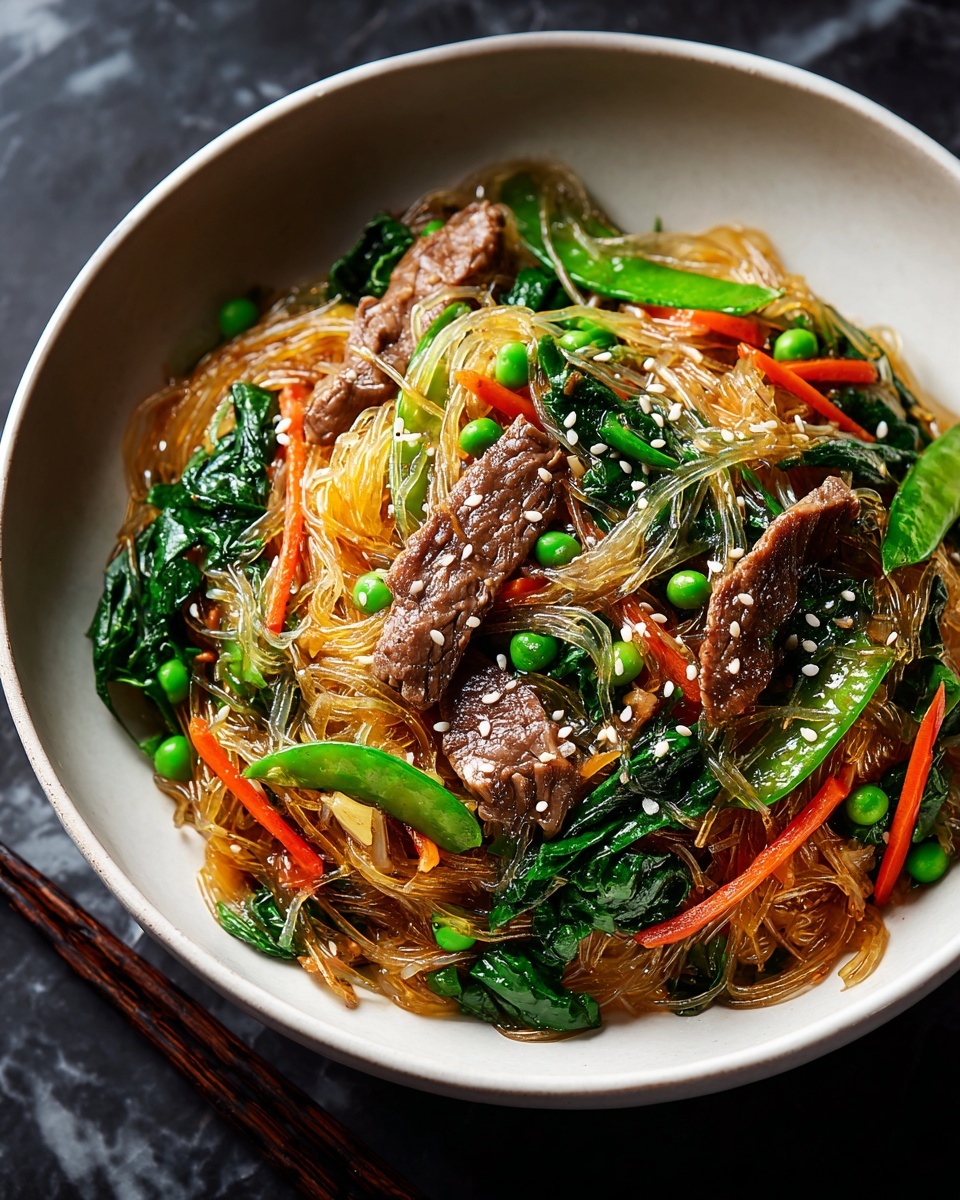
Garnishes
Freshly chopped green onions, toasted sesame seeds, and thinly sliced red chili rings add burst of color and texture. A light drizzle of additional toasted sesame oil right before serving enhances the aroma and sumptuous mouthfeel.
Side Dishes
Pair Japchae with a simple cucumber salad for crunch and acidity, or steamed white rice to soak up the savory juices. A mild egg drop soup or Korean kimchi (if you enjoy a tangy side) rounds out the meal perfectly.
Creative Ways to Present
Serve Japchae in individual bamboo steamers or on banana leaf-lined platters for an elegant, authentic touch. Alternatively, twirl portions neatly on plates making eye-catching nests, topped with a sprig of fresh cilantro or microgreens.
Make Ahead and Storage
Storing Leftovers
Cool Japchae completely before sealing in an airtight container. Refrigerate for up to 3 days, ensuring flavors remain vibrant and the noodles don’t clump.
Freezing
While freezing is possible, the texture of noodles and vegetables can change. If necessary, freeze in portioned containers for up to 1 month and thaw overnight in the fridge.
Reheating
Gently reheat leftovers in a skillet over medium-low heat, adding a splash of water or sesame oil to loosen the noodles and refresh flavors. Avoid microwaving to prevent noodles from becoming rubbery.
FAQs
Can I make Japchae gluten-free?
Absolutely! Use tamari instead of soy sauce and ensure the noodles you buy are gluten-free. The sweet potato noodles are naturally gluten-free.
Is Japchae usually served hot or cold?
Japchae can be enjoyed warm or at room temperature, making it versatile for meals and picnics.
Can I use other vegetables?
Yes! Feel free to add mushrooms, bell peppers, or zucchini, just be mindful of cooking times to keep textures balanced.
How should I slice the beef?
Thinly sliced beef is key for even cooking and tenderness. Partially freezing the meat can help achieve thin slices easily.
What kind of noodles are best for Japchae?
Sweet potato starch noodles, also called dangmyeon, are traditional for Japchae. They have a chewy, transparent quality perfect for absorbing flavors.
Can I prepare any parts of Japchae in advance?
You can prep vegetables and make the sauce ahead of time. Cooking noodles and beef last ensures freshness.
What is the role of brown sugar in this recipe?
Brown sugar adds a subtle caramel sweetness that balances the saltiness of soy sauce and the nuttiness of sesame oil.
Is Japchae suitable for meal prep?
Yes! Japchae keeps well, making it a vibrant, flavorful option for lunches or dinners throughout the week.
Final Thoughts
Japchae: Korean Glass Noodle Stir-Fry with Beef and Vegetables Recipe is a blossoming celebration of texture, color, and flavor that everyone can appreciate. It carries the comforting hum of home cooking with an exotic twist that feels both special and accessible. Whether you are introducing Korean cuisine to your family or looking for a dish to wow guests with minimal fuss, this recipe delivers with heart and vibrancy.
Have you tried this Japchae: Korean Glass Noodle Stir-Fry with Beef and Vegetables Recipe? I’d love to hear how it turned out! Leave a comment below. If you loved this recipe, please share it with friends and family. Happy cooking! 😊
Print
Japchae: Korean Glass Noodle Stir-Fry with Beef and Vegetables Recipe
- Prep Time: 30 minutes
- Cook Time: 30 minutes
- Total Time: 1 hour
- Yield: 10 servings 1x
- Category: Main Course
- Method: Stovetop
- Cuisine: Korean
Description
Japchae is a classic Korean stir-fried noodle dish featuring chewy sweet potato glass noodles with savory marinated beef and a colorful mix of vegetables like carrots, spinach, and onions. The dish is richly flavored with soy sauce, sesame oil, garlic, and brown sugar, making it a deliciously balanced meal that can be served warm as a main dish or side.
Ingredients
Protein
- 2 lb thin-sliced beef (or substitute with chicken, tofu, or shrimp)
Noodles
- 1 lb Korean sweet potato noodles (glass noodles)
Vegetables
- 3 medium carrots, julienned
- 1 large white onion, thinly sliced
- 1/2 bunch green onions, chopped
- 1/2 lb spinach leaves
- 6 garlic cloves, minced
Oils and Sauces
- 4 tbsp sesame oil (divided)
- 1 tbsp olive oil
- 6 tbsp soy sauce (or tamari for gluten-free)
- 3 tbsp brown sugar
Instructions
- Cook the noodles: Bring a large pot of water to a boil with a drizzle of olive oil to prevent sticking. Add the Korean sweet potato noodles and cook for 5-6 minutes until tender but chewy. Drain well and set aside.
- Prepare the beef: Heat a skillet over high heat. Add the thinly sliced beef and cook until browned, seasoning with half of the soy sauce, sesame oil, and brown sugar while cooking to marinate the beef. Once cooked through, remove from heat and set aside.
- Sauté the vegetables: In another skillet, heat the remaining olive oil over medium-high heat. Add the julienned carrots and thinly sliced white onion, cooking until they are softened. Add the remaining soy sauce, sesame oil, and brown sugar, stirring to coat. Mix in the minced garlic and chopped green onions and cook for an additional minute to release their aromas.
- Wilt the spinach: Add the spinach leaves to the vegetables in the skillet and cook, stirring gently, until the spinach has just wilted.
- Combine all ingredients: Transfer the cooked noodles to a large serving bowl. Add the sautéed vegetables and cooked beef to the noodles. Toss everything thoroughly to combine all the flavors and ingredients evenly.
- Serve: Serve the japchae warm. Optionally, garnish with extra chopped green onions for added freshness and color.
Notes
- You can substitute beef with chicken, tofu, or shrimp for a different protein option.
- Use tamari instead of soy sauce to make this dish gluten-free.
- For a vegetarian version, omit the meat and increase the amount of vegetables or tofu.
- Toasting sesame seeds and sprinkling them on top adds a nice crunchy texture and aroma.
- Japchae is best served fresh but can be stored in the refrigerator and gently reheated.


Your email address will not be published. Required fields are marked *