
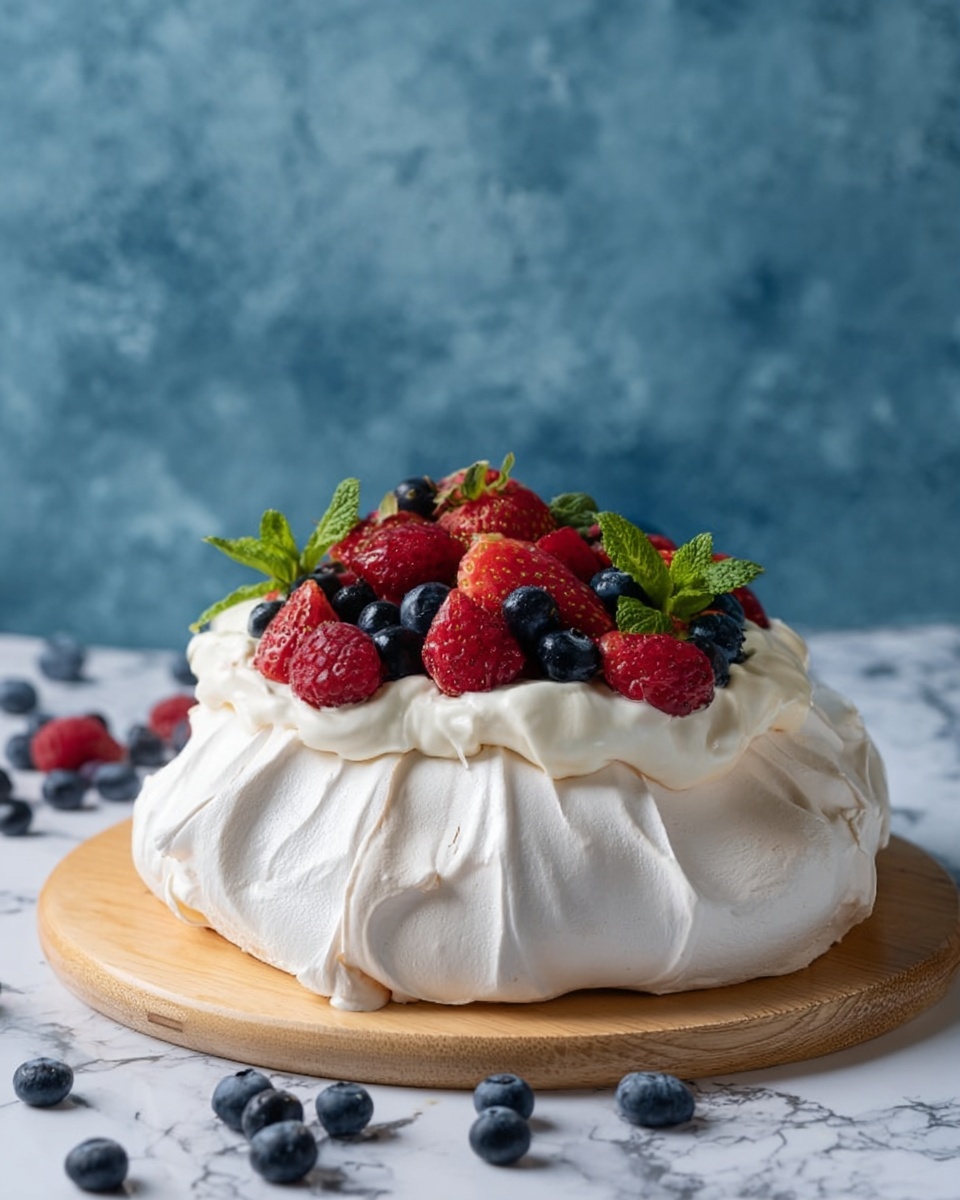
If you have a sweet tooth and love a dessert that is as stunning to look at as it is to eat, then you absolutely need to try this Best Pavlova Recipe. This classic treat boasts a crisp and delicate meringue shell that gives way to a marshmallow-soft center, crowned with fluffy whipped cream and fresh, juicy berries. It’s a show-stopper dessert that feels elegant yet approachable, perfect for celebrations or simply impressing friends and family with your baking skills. Once you master this Best Pavlova Recipe, you’ll find yourself reaching for it again and again whenever you want a dessert that’s both light and deeply satisfying.

Ingredients You’ll Need
Don’t be intimidated by the list because the ingredients for the Best Pavlova Recipe are surprisingly simple, yet each one plays a crucial role in crafting that perfect texture and flavor. With just a handful of basics, you’ll transform everyday pantry staples into something truly magical.
- 6 egg whites (at room temperature): Key to creating the airy meringue base with those stiff peaks that give pavlova its structure.
- 1 1/2 cups granulated/caster sugar: Adds sweetness and helps stabilize the meringue for that crisp exterior.
- Pinch of salt: Enhances the egg whites’ ability to whisk up to perfection.
- 3 tsp cornflour/cornstarch: Gives the pavlova a slight chewiness inside and helps prevent cracking.
- 1 tsp white vinegar: Balances the sweetness and stabilizes the meringue.
- 1 tsp vanilla essence: Adds subtle warmth and depth to the flavor.
- 1 cup cream (for whipping): Creates that luscious, cloud-like topping.
- Strawberries or other fresh berries (for serving): Offers vibrant color and fresh tartness that beautifully complements the sweetness of the pavlova.
How to Make Best Pavlova Recipe
Step 1: Prepare Your Tools and Oven
First things first, preheat your oven to 300°F (150°C). A little prep beforehand makes all the difference in baking success. Cleanliness is key with meringues, so soak a paper towel in white vinegar and wipe down your mixing bowl and whisk attachment—this ensures no grease interferes with your egg whites reaching their full potential. Toss the vinegar-soaked towel afterward.
Step 2: Whisk Egg Whites to Stiff Peaks
Using room temperature egg whites, start whisking them with a pinch of salt until they form firm, stiff peaks. This is the foundation of your pavlova’s airy structure, so be patient and make sure they hold shape without collapsing when you lift the whisk.
Step 3: Slowly Add Sugar
Gradually add 1/4 cup of sugar at a time, whisking after each addition. This slow incorporation helps dissolve the sugar fully, creating a smooth, glossy meringue. Keep checking by rubbing a little mixture between your fingers—if it feels grainy, it needs more whipping.
Step 4: Whisk for Glossy Perfection
After all the sugar is in, crank up your mixer to high and whisk for 3 minutes more until the mixture is thick and gleaming. A properly whisked meringue is the secret behind that crisp exterior and marshmallow-soft heart of the pavlova.
Step 5: Incorporate Cornflour, Vinegar, and Vanilla
Mix the cornflour, vinegar, and vanilla essence together in a small bowl, then gently fold this into your meringue mixture. This step adds subtle texture and flavor intricacies that elevate your pavlova from good to truly the best.
Step 6: Shape the Meringue
Line a 12-inch round pizza tray with parchment paper cut into a circle. Spoon the meringue onto it, forming an 8 to 9-inch circle. With a spatula, gently smooth and shape the sides with neat lines moving toward the top—this adds beautiful texture once baked.
Step 7: Bake Low and Slow
Reduce your oven temperature to 250°F (120°C) and place the pavlova in the middle rack. Bake for about 1 hour to 1 hour 15 minutes until lightly browned and dry to the touch. Turn off the oven but leave the pavlova inside with the door closed for 3 hours—it will slowly cool and set perfectly while gaining that iconic crispy shell and tender middle.
How to Serve Best Pavlova Recipe
Garnishes
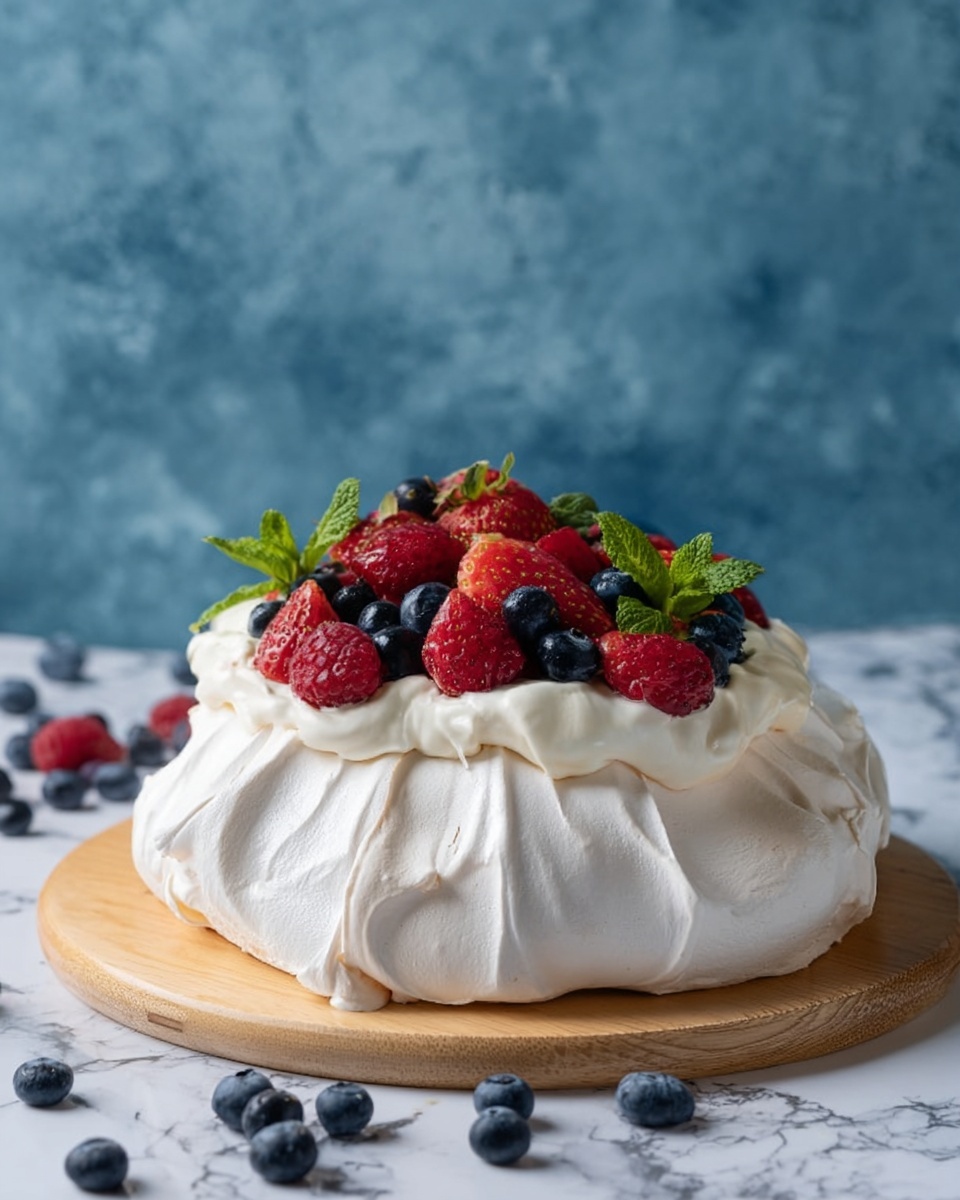
Once your pavlova’s cool, whip your cream until fluffy and dollop it generously in the center. Top it with a colorful medley of fresh berries like strawberries, blueberries, and raspberries. The bright, tart berries balance the sweet meringue and cream beautifully, making every bite a fresh and delightful experience.
Side Dishes
While pavlova is often a showstopper on its own, pairing it with a light fruit coulis or a scoop of sorbet can add a refreshing contrast. A zingy passionfruit coulis or mango sorbet works wonders to cut through the sweetness and refresh your palate.
Creative Ways to Present
If you want to get a little fancy, try layering your pavlova with alternating layers of whipped cream and fresh fruit to create individual pavlova nests. Or drizzle a homemade berry sauce artistically on top for an elegant finish. Because the Best Pavlova Recipe is so visually stunning, presentation options are endless and fun to experiment with!
Make Ahead and Storage
Storing Leftovers
Store any leftover pavlova in an airtight container at room temperature to keep the crisp shell from becoming chewy. It’s best enjoyed within a day or two for perfect texture and flavor.
Freezing
You can freeze the pavlova base without toppings by wrapping it tightly in plastic wrap and foil. Thaw at room temperature before adding cream and fresh berries, so your dessert tastes freshly made every time.
Reheating
It’s best not to reheat pavlova since the delicate texture could be compromised. Instead, enjoy it as is or simply whip fresh cream and add fresh berries to preserve that light, airy experience.
FAQs
What makes this pavlova the Best Pavlova Recipe?
The careful balance of crispy shell and marshmallow center, combined with the exact mix of cornflour and vinegar, gives this recipe its classic texture and flavor that many pavlova lovers seek.
Can I use regular white sugar instead of caster sugar?
Caster sugar is preferred as it dissolves more quickly, ensuring a smooth meringue. If using regular sugar, grind it slightly or be patient whisking it thoroughly to avoid graininess.
Why do I need to whisk egg whites to stiff peaks?
Stiff peaks help trap air within the meringue, giving the pavlova its signature light and airy structure. Soft or medium peaks won’t hold the shape well and could lead to a flat dessert.
Can I make this pavlova gluten-free?
Absolutely! This pavlova recipe is naturally gluten-free since it contains no flour—just cornflour, which is a gluten-free starch.
Is it possible to make vegan pavlova?
Traditional pavlova requires egg whites, so it’s not naturally vegan; however, aquafaba (chickpea water) can be used as a substitute with some experimentation if you want to try a vegan version.
Final Thoughts
There’s nothing quite like the joy of biting into a pavlova that’s crisp on the outside and pillowy soft inside, topped with clouds of whipped cream and juicy berries. This Best Pavlova Recipe is a celebration on a plate that you can proudly share with friends and family. Give it a try at your next gathering, and I promise it will become one of your go-to desserts, offering sweetness and delight in every forkful.
Print
Best Pavlova Recipe
- Prep Time: 15 minutes
- Cook Time: 1 hour 15 minutes
- Total Time: 4 hours 30 minutes
- Yield: 10 servings 1x
- Category: Dessert
- Method: Baking
- Cuisine: Australian/New Zealand
- Diet: Vegetarian
Description
This classic Pavlova recipe delivers a light, crisp meringue shell with a soft, marshmallow-like center. Topped with freshly whipped cream and vibrant berries, it’s a perfect dessert for celebrations or any special occasion.
Ingredients
Meringue:
- 6 egg whites (at room temperature)
- 1 1/2 cups granulated/caster sugar
- pinch salt
- 3 tsp cornflour/cornstarch
- 1 tsp white vinegar
- 1 tsp vanilla essence
Topping:
- 1 cup cream (for whipping)
- strawberries or other fresh berries (for serving)
Instructions
- Preheat the oven: Set your oven to 300°F (150°C) to get it ready for baking the meringue.
- Prepare your equipment: Soak a paper towel in a little white vinegar and use it to thoroughly clean your mixing bowl and whisk attachment to ensure no grease remains. Discard the vinegar-soaked paper towel afterwards.
- Whisk egg whites: Beat the egg whites with a pinch of salt until stiff peaks form, ensuring the meringue can hold its shape.
- Add sugar gradually: Slowly incorporate the sugar in 1/4 cup increments, whisking about a minute after each addition. Continue until the sugar is fully dissolved; test by rubbing a small amount between your fingers for smoothness.
- Whisk for volume: After adding all the sugar, whisk on high speed for an additional 3 minutes until the mixture is thick, glossy, and stiff.
- Prepare stabilizers: Mix the cornflour, vinegar, and vanilla essence in a small bowl.
- Combine ingredients: Fold the cornflour mixture gently into the meringue until just combined to maintain texture.
- Shape the pavlova: Line a 12-inch round pizza tray with baking paper. Scoop the meringue onto the paper and form a circle about 8-9 inches in diameter. Use a spatula to shape smooth, neat lines from the base to the top.
- Bake initial phase: Reduce oven temperature to 250°F (120°C) and place the pavlova on the middle shelf.
- Bake until set: Bake for 1 hour to 1 hour and 15 minutes. The pavlova should be lightly browned and dry to the touch. Use the oven light to monitor without opening the door unnecessarily.
- Cool slowly: Turn off the oven and leave the pavlova inside with the door closed for 3 hours to cool gradually and develop the perfect texture.
- Prepare topping: Whip the cream until soft peaks form.
- Serve: Spoon the whipped cream gently into the center of the cooled pavlova and top with fresh strawberries or berries of your choice.
Notes
- Ensure your mixing bowl and whisk are completely clean and free of any fat to achieve proper stiff peaks.
- Whipping egg whites at room temperature improves volume and texture.
- Adding sugar gradually and ensuring it’s fully dissolved is key to a smooth, glossy meringue.
- Cooling the pavlova slowly in the oven helps prevent cracks and preserve its soft center.
- You can substitute berries with passionfruit pulp or kiwi for variation.

Your email address will not be published. Required fields are marked *